
One of the most beautiful words used to describe the Catholic priest is sinner! Referring to all Christians, Saint Paul taught: But God, who is rich in mercy, because of the great love he had for us, even when we were dead in our transgressions, brought us to life with Christ (Eph 2:4-5).
Eucharistic Prayer I, the Roman Canon, refers to us priests in a particular way. Beating his breast, the priest says, “To us, also, your servants, who, though sinners.”1
All of us, priests and faithful, recognize our sins and we ask God for pardon for those sins during the Holy Mass. Afterwards, we priests wash our hands and ask God in prayer that He wash us from our stains, from our sins. We are sinners! It must be kept in mind that that ancient liturgical formula, “To us, also, your servants, who, though sinners” is a formula for the priest to commend himself into the hands of God. Why is it in the plural? It refers not only to the principal celebrant, but also to all the ministers that are assisting the celebrant at the altar. That formula never refers to the community, but rather, and properly, the priest. It must also be noted that from of old Catholics priests were referred to with the Latin word peccator (sinner); in fact, it was often added to priests’ signatures. For example, in the 6th century, in the 4th Council of Paris, the documents read: “Germanus peccator . . . Lucretius, ac si peccator; Felix, ac si peccator.”2 This formula gave rise to that tiny cross which precedes the name and signature of bishops. In ancient Greek documents, ταπεινός was added to the signature, which means low, humble, and contemptible; later this word ταπεινός was reduced to the initial τ, and it ended up becoming a cross.
The true priest has a clear awareness that he is a sinner; this is simply the way it is, even if the priest has never committed a mortal sin in his life. In a beautiful way, Saint Thérèse of the Child Jesus said that she considered herself a greater sinner than Mary Magdalene, and this was because she had never committed a mortal sin! She added the reason: because God, in His Mercy, “forgave me in advance by preventing me from falling.”
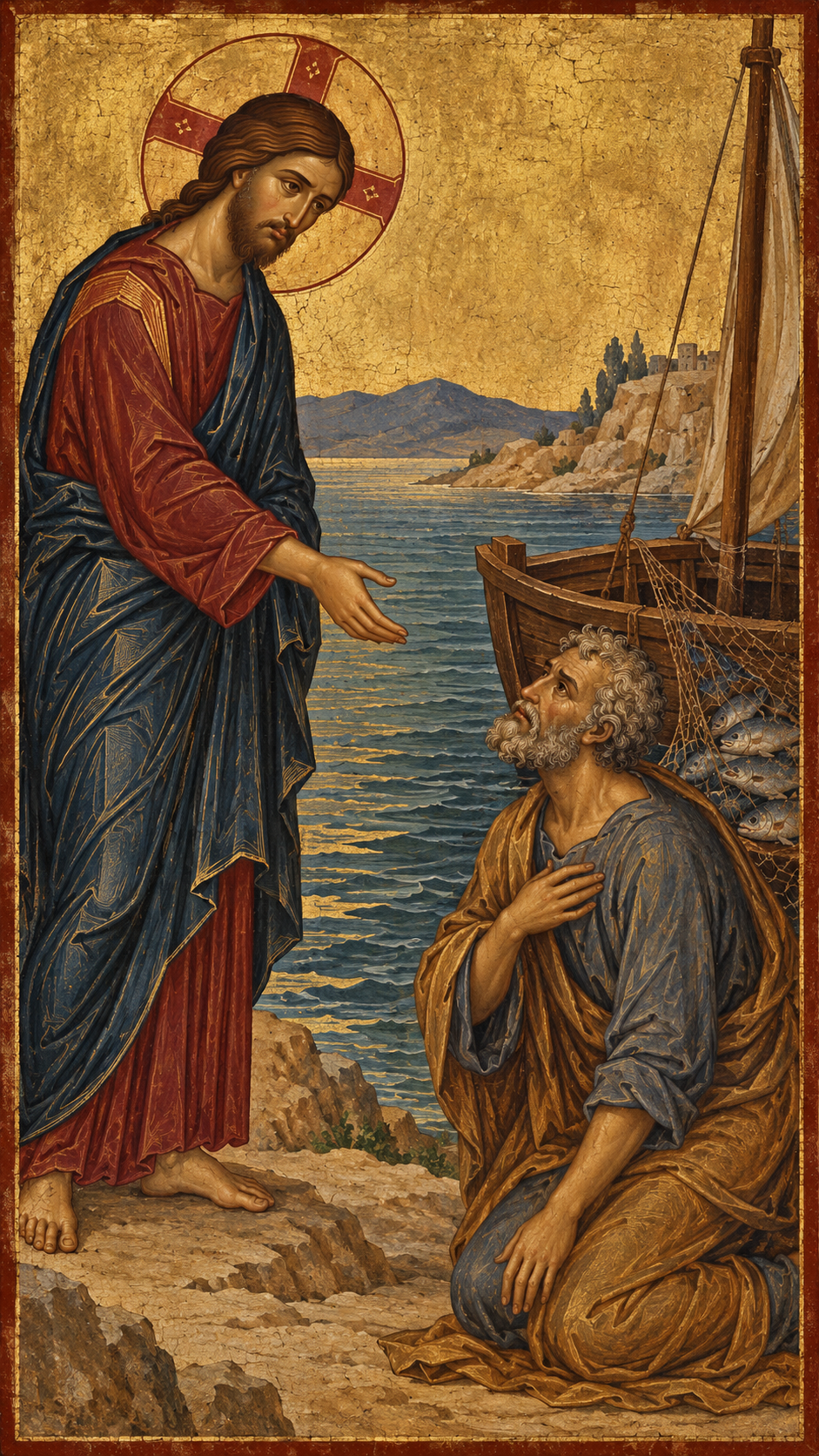
This awareness, one that all priests must have, springs above all from our intimate contact with the Lord in prayer. It was the experience of Saint Peter when he found himself with Jesus: Depart from me, Lord, for I am a sinful man (Lk 5:8). When one considers who God is, when one considers the transcendence, majesty, excellence, and ineffable sanctity of God, one cannot do anything but realize, as Job said, that even the heavens are not clean in his sight (15:15).
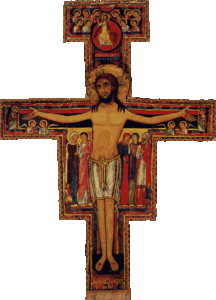
This sense that we are sinners is reinforced by the consideration of the august mystery of the Incarnation of the Son of God. On account of our sins, it was most fitting that the Only Son of God, the Second Person of the Most Holy Trinity, become man in order to take a body in the womb of the Virgin, take that body to the cross, and die there for all of us. This is why, in the moment that we priests say, “your servants, who, though sinners” we beat our breasts, in a way similar to what the crowd that had gathered in front of the Lord’s cross on Golgotha did: When all the people who had gathered for this spectacle saw what had happened, they returned home beating their breasts (Lk 23:48).
It seems to me that it is of great benefit for all priests to consider this reality: we are sinners! We should be warned that normally our people, the faithful people, the Christian people–who sometimes realize even better than we do what a priest is–will consider the priest a saint very easily. As Saint Joseph Cafasso said, “To be an exemplar priest, the judgment of the world is not enough. A priest can be regarded as a saint by the people and yet not be so in front of God. A third of the virtues proper to a cleric are enough for him to be considered as a saint, but the Lord does not recognize him as such if he does not endeavor with all of his strength, not only to flee from mortal sin, but even from venial faults and the appearance of guilt.”3 However, even if we are doing one hundred percent of what we should be, we still cannot be considered saints or holy, because only the Lord is holy.
Moreover, on account of the priestly ministry itself, we priests know the gravity of sin, as the prophet Jeremiah stated: Two evils have my people done: they have forsaken me, the source of living waters, [and] they have dug themselves cisterns, broken cisterns, that can hold no water (2:13). As sin is an offense to God, amends must be made for it. In this sense, each and every priest has to make reparation. Accordingly, the principal act of the priest is sacrifice, asking pardon for sins, for his own and for those of the whole world. The Letter to the Hebrews tells us: Every high priest is taken from among men and made their representative before God, to offer gifts and sacrifices for sins (5:1). The inspired author adds even more: the priest is able to deal patiently with the ignorant and erring, for he himself is beset by weakness and so, for this reason, must make sin offerings for himself as well as for the people (5:2-3). From here follows the indissoluble union between the priest and the sacrifice of the cross, perpetuated on our altars; every priest should be defined as a man of the Mass, a man of the Eucharist.
Furthermore, as sin is a sort of turning back to creatures, it destroys human values; it is the un-truth, and, un-retracted, it merits punishment. Sin causes men harm. This gives rise to the priestly concern for the sanctification and salvation of all men, and so the priest is the man of the Word, of the Word of God that saves and that must be preached; the priest must also be a man of the confessional.
We must ask that all priests of the world, ourselves included, who were called by the Lord in a mysterious and yet real way to follow Him more closely in the priestly ministry, might never lose sight of that reality that is a part of each one of us: we are sinners! This must especially be kept in mind today when, time and time again, orchestrated campaigns come out against the priesthood–as His Holiness Pope John Paul II remarked–seeking to scandalize the faithful and the local church by inventing calumnies, as happened in the church in Austria, causing much damage to souls. This is because many times the enemies of the Church pretend that we priests must be impeccable, and this is a great mistake: as priests we do have to be saints, but, like all sons of men, we are sinners.
This is why we must always ask that for constant growth in the awareness of our great sinfulness. That awareness must lead us to spend ourselves and be spent for the good of souls,4 as Saint Paul said. As another, contemporary author, the celebrated English writer G. K. Chesterton, said, “We sinners should work as if we were saints.”
The clear awareness that we are sinners should bring us to be merciful men. As Marcelo Javier Morsella5 wrote, “I should keep in mind my condition as a sinner in order to always be amazed at the Mercy that pulled me out of hell and that calls me again to His heaven.” When we pray Eucharistic Prayer I, upon beating our breasts and saying, “your servants, who, though sinners,” we must never forget that it continues “[we] hope in your abundant mercies,” in that infinite mercy of God, that mercy which is greater than all of the sins of all men of all times, because that mercy of God is sealed by the blood of His Only Son which was shed for all of us on Calvary, on Golgotha. We should reach the point where we fulfill what Saint Louis de Montfort prophesized of the slaves of our Lady:
“But what will they be like, these servants, these slaves, these children of Mary?”
“They will be ministers of the Lord who, like a flaming fire, will enkindle everywhere the fires of divine love.”
“They will become, in Mary’s powerful hands, like sharp arrows, with which she will transfix her enemies.”
“They will be as the children of Levi, thoroughly purified by the fire of great tribulations and closely joined to God. They will carry the gold of love in their heart, the frankincense of prayer in their mind, and the myrrh of mortification in their body.”
“They will bring to the poor and lowly everywhere the sweet fragrance of Jesus.”
“They will be like thunder-clouds flying through the air at the slightest breath of the Holy Spirit. Attached to nothing, surprised at nothing, troubled at nothing, they will shower down the rain of God’s word and of eternal life.”6
We will always offer sacrifice for our sins and for the sins of all. As an author once beautifully said: all day long, the priest says to the Heavenly Father: Kyrie eleison, Lord, have mercy on us. At the middle of the day: Kyrie eleison, Lord, have mercy on us, and, in the afternoon and at night, Lord, have mercy on us. Who is the us of the Kyrie? It is all men, our brothers, including the priest himself. That is our task: we suffer with the rest of the world and confide always and without limits in the Queen and Mother of Mercy, in the Virgin Mary, Mother of all Priests.
Notes
- Roman Missal, Eucharistic Prayer I ↩
- Mansi IX, 867-868; cit. Mons. Alessio, Una Liturgia para Vivir (Buenos Aires 1978) 66. ↩
- A. Grazioli, Modelo de Confesores: San José Cafasso (Madrid, no date) 30-31. ↩
- Cfr. 2 Cor 12:15. ↩
- Seminarian of the Institute of the Incarnate Word, who died in February, 1986; first member of the Institute of the Incarnate Word to go to be with the Incarnate Word Himself. Following Marcelo’s death, Fr. Buela remarked, “Today, we have a foundation in heaven.” ↩
- Treatise on True Devotion to the Blessed Virgin, 56-57. ↩
Source: Carlos Buela, You Are Priests Forever, Volume 2: What the Priest Is (Part Two), IVE Press, New York, 2013, pp. 13-18. Text and notes from the original edition.