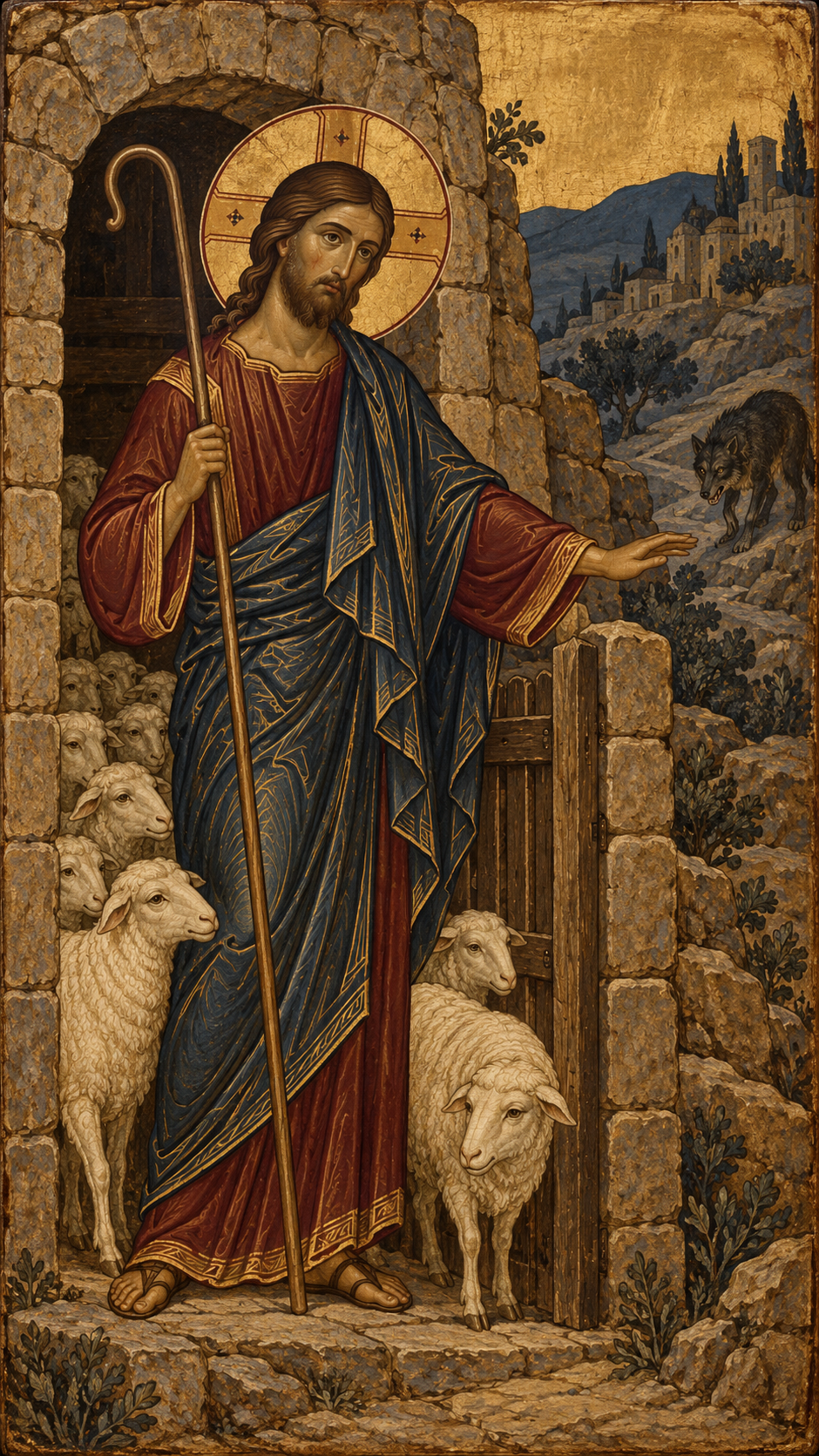

3 ON BAD SHEPHERDS1
The prophet Ezekiel warns bad shepherds.
One of the most serious temptations that Christians are given to suffer is to see evil within the Church. Accordingly, God our Lord showed us what our attitude should be in the face of this danger, and so the theological principles that should help a Christian to know how to act in those circumstances belong to the deposit of faith; they belong to the revelation of God Himself, contained explicitly in Sacred Scripture and commented on by the Holy Doctors. Evil in the Church is even more serious when it seems to incarnate itself in certain shepherds of the flock; this is why we see the theme, again and again, of bad shepherds, that is, those who, by reason of their office, belong to the hierarchy of the Church. However, strictly speaking, these harsh words are also applicable to all men and women according to their responsibilities: to parents, artists, teachers, bosses, grandparents, professionals, public authorities, journalists, superiors, and so on.
Since this topic comes up in divine revelation itself, it shouldn’t worry us too much when the media investigates something successfully, meaning that, according to their criteria, they found something that can taint the Church; this is because, in general, they aren’t familiar with revelation as they’re usually on the fringes of the Catholic faith, and because they value a scandal that will increase their viewer audience or their ratings. For example, the Brazilian magazine Isto’e once pointed out that there were 1,700 pedophile priests in Brazil, and that the Holy See had ordered a commission to investigate the issue. The news spread like wild fire over the world through all the different means of communication. A few days later, the public denial came out: the number of priests wasn’t that great, nor was there a commission.2 These people lie, because they know that something always sticks.
The topic of bad shepherds is one aspect of the problem of evil. God neither creates, nor causes, nor desires evil, because evil is the privation of the proper good. He only permits it, because He respects the freedom of His creatures, and because He is so powerful and so wise that He can get good from evil, as Joseph in the Old Testament said, Even though you meant harm to me, God meant it for good, to achieve his present end, the survival of many people. Therefore have no fear. I will provide for you and for your children (Gn 50:20-21); all things work for good for those who love God (Rom 8:28).
There are shepherds who want to have the title of shepherd without wanting to fulfill a pastor’s duties; let us recall then what God says to his shepherds through the prophet. You must listen attentively; I must listen with fear and trembling.
The First Principle: Bad Shepherds Only Feed Themselves
Thus the word of the Lord came to me: Son of man, prophesy against the shepherds of Israel (Ez 34:1-2). We just heard this reading a moment ago, my brothers, and I have decided to speak to you on this passage. The Lord will help me to speak the truth if I do not speak on my own authority. For if I speak on my own authority, I will be a shepherd nourishing myself and not the sheep. However, if my words are the Lord’s, then He is nourishing you no matter who speaks. Son of man, prophesy against the shepherds of Israel, in these words prophesy to them (to the shepherds): Thus says the Lord God: Woe to the shepherds of Israel who have been pasturing themselves! Should not shepherds, rather, pasture sheep? (Ez 34:2). In other words, true shepherds take care of their sheep, not themselves. This is the principle reason why God condemns those shepherds: they took care of themselves rather than their sheep. Who are they who nourish themselves? They are the shepherds the Apostle described when he said: For they all seek their own interests, not those of Jesus Christ (Phil 2:21).
I have been made a shepherd because the Lord wanted me to be such, and not because of any merits of my own; in my place as shepherd I must carefully distinguish between two aspects of the role the Lord has given me, a role that demands rigorous accountability, a role based on the Lord’s greatness rather than on my own merit. The first aspect is that I am a Christian; the second, that I am a leader. I am a Christian for my own sake, whereas I am a leader for your sake; the fact that I am a Christian is to my own advantage, but I am a leader for your advantage. Many persons come to God as Christians but not as leaders. Perhaps they travel by an easier road and are less hindered since they bear a lighter burden. In addition to the fact that I am a Christian and must give God an account of my life, as a leader I must give Him an account of my stewardship as well (we must give an account of the duties of our state of life).
As superiors are there in order to care for those whom they lead, they must not seek to serve their own desires, but rather those of the ones whom they serve: Anyone who is a superior in such a way that he enjoys himself is one who seeks his own honor and looks only for his own comfort; he pastures himself and not the sheep.
A. What do Bad Shepherds Love?
– They Live Off the Milk of the Sheep
Let us consider the unflattering words of God which Scripture addresses to shepherds who feed themselves and not the sheep. You have fed off their milk, worn their wool, and slaughtered the fatlings, but the sheep you have not pastured. You did not strengthen the weak nor heal the sick nor bind up the injured. You did not bring back the strayed nor seek the lost. . . So they were scattered for lack of a shepherd (Ez 34:4-5).
This is spoken to the shepherds who feed themselves and not the sheep; it speaks of their concern and their neglect. What is their concern? You consume their milk and cover yourselves with their wool. Yes, the shepherd has a right to his keep: those who minister at the altar share in the sacrificial offerings (1 Cor 9:13) but he must not pasture the flock only for this. And so the Apostle asks: Who plants a vineyard and does not eat from its fruit? Who pastures a flock and does not drink from the milk of the flock? Thus we learn that the milk of the flock is whatever temporal support and sustenance God’s people give to those who are placed over them. It is of this that the Apostle was speaking in the passage just quoted.
As for those who cannot support themselves with their own hands as Paul did, let them take from the milk of the sheep, let them receive what is necessary for their needs, but let them not neglect the weakness of the sheep. Let them not seek any benefit for themselves, lest they appear to be preaching the Gospel for the sake of their own need and privation; rather, let them provide the light of the true word for the sake of men’s enlightenment. For they are like lamps . . . and if they don’t shed light, they are bad shepherds.
Some shepherds must be given and accept those things that they need to live, and for other shepherds, it is necessary to give those things out of charity. Only let not the Gospel be for sale, with preachers demanding a price for it and making their living from it. If they sell it like that, they are selling for a pittance something that is of great value. Let them receive support in their need from the people, but payment for their stewardship from the Lord. No, it is not right for the people to give payment to those who serve them out of love of the Gospel. Payment is to be expected only from the one who also grants salvation. Why then are they rebuked? Why are they accused? It is because when they took the milk and covered themselves with the wool, they neglected the sheep. They sought only to serve their own cause and not Christ’s.
– They Wear the Wool of the Sheep
I have explained what it means to consume milk. Now let us consider what it means to clothe with wool. One who gives milk gives sustenance, while one who gives wool gives honor. These are precisely the two things that pastors, who feed themselves and not the sheep, look for from the people–the benefit of having their wants supplied as well as the favor of honor and praise. Yes, clothing can well be taken to mean honor, since it covers nakedness. For every man without exception is weak. And who is any man placed over you except someone just like yourself. Your pastor is in the flesh, he is mortal, he eats, sleeps and awakens; he was born and he is going to die. In himself he is, when you think of it, simply a man. But it is true that you make him something more by giving him honor; it is as if you were covering what is weak.
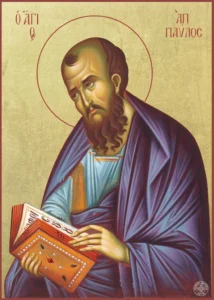
Consider the nature of the clothing that the apostle Paul received from God’s good people. He said: You received me as an angel of God, as Christ Jesus. . . Indeed, I can testify to you that, if it had been possible, you would have torn out your eyes and given them to me (Gal 4:14-15). Indeed great honor was shown to him. But did he then spare sinners because of that honor, perhaps out of fear that it would be refused and that he would receive less praise when he gave blame? Had he done so, he would be among those shepherds who feed themselves and not the sheep. He would then say to himself: “What has this to do with me? Let everyone do what he will; my sustenance is safe, and my honor too. I have enough milk and wool, so let each one do as he likes.” But then are things really secure for you if each one does as he pleases? I do not want to make you a leader over the people but one of them. If one part suffers, all the parts suffer with it (1 Cor 12:26). In recalling how they treated him, the Apostle does not want to appear forgetful of the honor they did him. Therefore he gives testimony that they received him like an angel of God, that if it were possible, they were willing to tear out their eyes and give them to him. Yet he still comes to the sheep that is ill, to the one that is diseased, to cut the wound and not to spare the diseased part. He says: So now, have I become your enemy by telling you the truth? (Gal 4:16). He took from the milk of the sheep, as I mentioned a short time ago, and he was clothed with their wool, but he did not neglect his sheep. He did not seek what was his but what was Christ’s.
– On account of Their Disordered Love,
Bad Shepherds Preach the Abuse of Mercy, Thinking That This will Attract More Faithful
Far be it for us to tell you: “Live as you want, and rest assured that God doesn’t lose a single soul. It’s enough for you to have the Christian faith. Christ doesn’t lose anyone whom He redeemed; anyone of those for whom He shed His blood cannot be lost. If you want to delight yourself with public performances, go about it peacefully. What harm is there in it? Go, put your soul at ease and celebrate this party too, the one that the entire city takes part in, amidst the happiness of your guests and those who think that they will be happy with these public feasts, when in reality they lose. God’s mercy is great, and He forgives everything. Enjoy life before it ends. You can celebrate the banquet in the house of our God whenever you want; fill yourself, saturate yourself with wine in the company of your companions here. All creatures were given to you so that you could enjoy them. God didn’t give them to the pagans or to evildoers, and yet He did not deprive you of them.” If we were to recommend all of this, perhaps we would gather in greater crowds. Upon hearing us say these things, perhaps there are some who think that we haven’t spoken wisely; there might be some who are offended, and who maintain that we should ingratiate ourselves with the people. If we were to say all this, however, we would not be preaching the word of God, nor that of Jesus Christ, but rather our own; we would be shepherds who pasture themselves, and not the flock. The one who abuses mercy will not be shown mercy.
B. What These Shepherds Neglect
– They Kill the Strong Sheep
After the Lord had shown what wicked shepherds esteem, He speaks about what they neglect. The defects of the sheep are widespread. There are very few healthy and sound sheep, few that are solidly sustained by the food of truth, and few that enjoy the good pasture God gives them. But the wicked shepherds do not spare such sheep. It is not enough that they neglect those that are ill and weak, those that go astray and are lost. So far as it is in their power, they even try to kill the strong and healthy. Yet such sheep live; yes, by God’s mercy they live. As for the wicked shepherds themselves, they kill the sheep. “How do they kill them?” you ask. By their wicked lives and by giving bad example. Or was God’s servant, who was high among the members of the chief shepherd, told this in vain: Show yourself as a model of good deeds (Titus 2:7) and Set an example for those who believe (1 Tim 4:12)? Even the strong sheep, if he turns his eyes from the Lord’s laws and looks at the man set over him, notices when his shepherd is living wickedly and begins to say in his heart: “If my pastor lives like that, why should I not live like him?” (As the saying goes: if the Abbot plays cards, what’s to become of the friars? If he is the best, I’d hate to see the worst!). The wicked shepherd kills the strong sheep. But if he kills the strong one what does he do to the rest? After all, by his wicked life he kills even the sheep he didn’t strengthen but had found strong and hardy.
Second Principle: Do and Observe All things Whatsoever They Tell You, But do not Follow Their Example
I appeal to your love, and again I say, even if the sheep have life and if they are strong in the word of the Lord, and if they hold fast to what they have heard from their Lord, Do and observe all things whatsoever they tell you, but do not follow their example (Mt 23:3). Still, as far as he himself is concerned, the shepherd who lives a wicked life before the people kills the sheep under his care. Let such a shepherd not deceive himself because the sheep is not dead, for though it still lives, he is a murderer, just as when the lustful man looks on a woman with desire, even though she is chaste, he has committed adultery. For the Lord said in plain truth: everyone who looks at a woman with lust has already committed adultery with her in his heart (Mt 5:28). He has not entered her bedroom, yet he has ravished her within the bedroom of his heart. Therefore anyone who lives wickedly before those who have been placed under his care kills, as far as he himself is concerned, even the strong. Whoever imitates him, dies; whoever does not, has life. But as for him, he kills both of them: You slaughtered the fatlings, he remarks, but the sheep you have not pastured.
How many times, even without us realizing it, have we, by our bad examples, been the cause of the death of good sheep! I think that this is one of the main reasons why we do not hear more preaching about bad shepherds. For this reason, we should put into practice the teaching of Saint Gregory the Great: Son of man, I have appointed you a watchman for the house of Israel (Ez 3:17). Note that Ezekiel, whom the Lord sent to preach his word, is described as a watchman. Now, a watchman always takes up his position on the heights so that he can see from a distance whatever approaches. Likewise whoever is appointed watchman to a people should live a life on the heights so that he can help them in taking a wide survey. These words are hard to utter, for when I speak it is myself that I am reproaching. I do not preach as I should nor does my life follow the principles I preach so inadequately. I do not deny that I am guilty, for I see my torpor and my negligence. Perhaps my very recognition of failure will win me pardon from a sympathetic judge. Who am I – what kind of watchman am I? I do not stand on the pinnacle of achievement; I languish rather in the depths of my weakness. And yet the creator and redeemer of mankind can give me, unworthy though I be, the grace to see life whole and power to speak effectively of it. It is for love of him that I do not spare myself in preaching him.3
– They do not Strengthen the Weak
You have already been told about the wicked things that bad shepherds desire. Let us now consider what they neglect. You did not strengthen the weak nor heal the sick nor bind up the injured. You did not bring back the strayed nor seek the lost, but you lorded it over them harshly and brutally (Ez 34:4). What was strong you have destroyed. Yes, you have cut it down and killed it.
The sheep is weak, that is to say, its heart is weak, and so, incautious and unprepared, it may give in to temptations. The negligent shepherd fails to say to the believer: My son, when you come to serve the Lord, prepare yourself for trials (Sir 2:1). A shepherd who does say this strengthens the one who is weak and makes him strong. Such a believer will then not hope for the prosperity of this world. For if he has been taught to hope for worldly gain, he will be corrupted by prosperity. When adversity comes, he will be wounded or perhaps destroyed. The builder who builds in such manner is not building the believer on a rock but upon sand. The rock was Christ (1 Cor 10:4). Christians must imitate Christ’s sufferings, not set their hearts on pleasures. He who is weak will be strengthened when told: “Yes, expect the temptations of this world, but the Lord will deliver you from them all if your heart has not abandoned Him. For it was to strengthen your heart that He came to suffer and die, came to be spit upon and crowned with thorns, came to be accused of shameful things, yes, came to be fastened to the wood of the cross. All these things He did for you, and you did nothing. He did them not for Himself, but for you.”
But what sort of shepherds are they who, for fear of giving offence, not only fail to prepare the sheep for the temptations that threaten, but even promise them worldly happiness? God Himself made no such promise to this world. On the contrary, God foretold hardship upon hardship in this world until the end of time. And you want the Christian to be exempt from these troubles? Precisely because he is a Christian, he is destined to suffer more in this world. For the Apostle says: All who want to live religiously in Christ Jesus will be persecuted (2 Tim 3:12). But you, shepherd, seek what is yours and not what is Christ’s, and so you disregard what the Apostle says: All who want to live a holy life in Christ will suffer persecution. You say instead: “If you live a holy life in Christ, all good things will be yours in abundance. If you do not have children, you will embrace and nourish all men, and none of them shall die.” Is this the way you build up the believer? Take note of what you are doing and where you are placing him. You have built him on sand. The rains will come, the river will overflow and rush in, the winds will blow, and the elements will dash against that house of yours. It will fall, and its ruin will be great. Lift him up from the sand and put him on the rock. Let him be in Christ, if you wish him to be a Christian. Let him turn his thoughts to sufferings, however unworthy they may be in comparison to Christ’s. Let him center his attention on Christ, who was without sin, and yet made restitution for what He had not done. Let him consider Scripture, which says to him: He scourges every son he acknowledges (Heb 12:6). Let him prepare to be chastised, or else not seek to be acknowledged as a son. Scripture says: God chastises every son whom he acknowledges. But the bad shepherd says: “Perhaps I will be exempt.” If he is exempt from the suffering of his chastisements, then he is not numbered among God’s sons. You will say: “Does God indeed punish every son?” Yes, every one, just as He chastised His only Son. His only Son, born of the substance of the Father, equal to the Father in the form of God, the Word through whom all things were made, could not be chastised. For this reason the Son was clothed with flesh so that He might know chastisement. God punishes His only Son who is without sin; does He then leave unpunished an adopted son who is with sin?
But clearly one who is weak must neither be deceived with false hope nor broken by fear. Otherwise he may fail when temptations come. Say to him: prepare yourself for trials. Perhaps he is starting to falter, to tremble with fear, perhaps he is unwilling to approach. You have another passage of Scripture for him: God is faithful and will not let you be tried beyond your strength (1 Cor 10:13). (It will always be true that: faciente quod est in se, Deus non denegat gratiam).4 This was the experience of Saint Paul: Therefore, that I might not become too elated, a thorn in the flesh was given to me, an angel of Satan, to beat me, to keep me from being too elated. Three times I begged the Lord about this, that it might leave me, but he said to me, ‘My grace is sufficient for you, for power is made perfect in weakness.’ I will rather boast most gladly of my weaknesses, in order that the power of Christ may dwell with me. Therefore, I am content with weaknesses, insults, hardships, persecutions, and constraints, for the sake of Christ; for when I am weak, then I am strong (2 Cor 12:7-10). Strengthening the weak consists in these two things: promising them the help of God, and announcing suffering in the future.
– They do not Bind up the Injured
When someone is held back because of excessive fear, promise him God’s mercy. It is not that temptations will be lacking, but that God will not permit anyone to be tempted beyond what he can bear. In this manner you will be binding up the broken one. When they hear of the trials that are coming, some men arm themselves more and, so to speak, are eager to drain the cup. The ordinary medicine of the faithful seems to them but a small thing; for their part they seek the glorious death of the martyrs. Others hear of the temptations to come, and when those temptations do arrive, as arrive they must, these sheep become broken and lame. Yet it is right that such things befall the Christian, and no one esteems them except the one who desires to be a true Christian. Offer the bandage of consolation, bind up what has been broken. Say this: Do not be afraid; the One in whom you believe will not abandon you in the midst of temptations. God is faithful and will not let you be tried beyond your strength (1 Cor 10:13). It is not I who say this, but the Apostle, and he says further: Are you looking for proof of Christ speaking in me? (cf. 2 Cor 13:3). When you hear this you are hearing it from Christ Himself, you are hearing it from the Shepherd who gives pasture to Israel. For of Him it was said: You have made them drink tears in abundance (Ps 79:6). The Apostle says: He will not let you be tried beyond your strength. This is also what the prophet intends by adding the words: in abundance. As for those who fail to do this and those who are negligent, you have heard what was said to them: You did not strengthen the weak nor heal the sick nor bind up the injured. Man was broken by terrible temptations. But there is at hand a consolation that will bind what was broken: God is faithful and will not let you be tried beyond your strength; but with the trial he will also provide a way out, so that you may be able to bear it (1 Cor 10:13).
God rebukes but also encourages; He brings fear and He brings consolation, He strikes and He heals. Don’t reject Him!
– They do not Heal the Sick
You did not strengthen the weak nor heal the sick, says the Lord. He is speaking to wicked shepherds, false shepherds, shepherds who seek their own concerns and not those of Christ. They enjoy the bounty of milk and wool, but they take no care at all of the sheep, and they make no effort to heal those who are ill. I think there is a difference between one who is weak (that is, not strong) and one who is ill, although we often say that the weak are also suffering from illness. My brothers, when I try to make that distinction, perhaps I could do it better and with greater precision, or perhaps someone with more experience and insight could do so. But when it comes to the words of Scripture, I say what I think so that in the meantime you will not be deprived of all profit. In the case of the weak sheep, it is to be feared that the temptation, when it comes, may break him. The sick person, however, is already ill by reason of some illicit desire or other, and this is keeping him from entering God’s path and submitting to Christ’s yoke. There are men who want to live a good life and have already decided to do so, but are not capable of bearing sufferings even though they are ready to do good. Now it is a part of the Christian’s strength not only to do good works but also to endure evil. Weak men are those who appear to be zealous in doing good works but are unwilling or unable to endure the sufferings that threaten. Lovers of the world, however, who are kept from good works by some evil desire, lie sick and listless, and it is this sickness that deprives them of any strength to accomplish good works. The paralytic was like that. When his bearers could not bring him in to the Lord, they opened the roof and lowered him down to the feet of Christ. Perhaps you wish to do this in spirit: to open the roof and to lower a paralytic soul down to the Lord. All its limbs are lifeless, it is empty of every good work, burdened with its sins, and weak from the illness brought on by its evil desires. Since all its limbs are helpless, and the paralysis is interior, you cannot come to the physician. But perhaps the physician is himself is concealed within; for the true understanding of Scripture is hidden. Reveal therefore what is hidden, and thus you will open the roof and lower the paralytic to the feet of Christ.
– They Brought Back Neither the Strayed nor the Lost
See how we find ourselves in danger in the midst of heretics: You did not bring back the strayed nor seek the lost. In one way or another, we go on living between the hands of robbers and the teeth of raging wolves, and in light of these present dangers we ask your prayers. The sheep moreover are insolent. The shepherd seeks out the straying sheep, but because they have wandered away and are lost they say that they are not ours. “Why do you want us? Why do you seek us?” they ask, as if their straying and being lost were not the very reason for our wanting them and seeking them out. “If we are straying,” they say, “If we are lost, why do you want us?” You are straying, that is exactly why I wish to recall you. You have been lost, and that is precisely why I wish to find you. “But, we really want to stray,” they say. “We really want to be lost!” So you wish to stray and be lost? How much better that I do not also wish this! Certainly, I dare say, I am unwelcome. But I listen to the Apostle who says: Proclaim the word; be persistent whether it is convenient or inconvenient (2 Tim 4:2). Convenient to whom? Inconvenient to whom? By all means welcome to those who desire it; unwelcome to those who do not. However unwelcome, I dare to say: “You wish to stray, you wish to be lost; but I do not want this.” For the one whom I fear does not wish this. And should I wish it, consider his words of reproach: You did not bring back the strayed nor seek the lost. Should I fear you more than I fear Him? We must all appear before the judgment seat of Christ (2 Cor 5:10). I am not afraid of you. You cannot overthrow the judgment seat of Christ and make one of relativists. I shall recall the straying; I shall seek the lost. Whether they wish it or not, I shall do it. And should the brambles of the forests tear at me when I seek them, I shall force myself through all straits; I shall put down all hedges. So far as the God whom I fear grants me the strength, I shall search everywhere. I shall recall the straying; I shall seek after those on the verge of being lost. If you do not want me to suffer, do not stray, do not become lost.
– If the Strayed Are not Sought,
Even the Strong Can Become Lost
It is enough that I lament your straying and loss. No, I fear that in neglecting you, I shall also kill what is strong. Consider the passage that follows: And what was strong you have destroyed. Should I neglect the straying and lost, the strong one will also take delight in straying and in being lost. I want exterior earnings, but I fear inner sufferings even more. If I show myself to be indifferent in the face of your erring, when the strong one sees it, he will think that it is no big deal to wonder off into heresy. If I do not seek you out, you who are lost, then when something convenient appears in the world which justifies the change, that strong sheep, who was on the brink of being lost, will immediately tell me, “God is here and there; what more is there? This is the work of men who like to argue, “God needs to be adored everywhere.” If, by chance, a young man were to be told by a progressive, a dissident, or a heterodox believer: “I won’t let you marry my daughter unless you join my side,” that young man would need to reflect and say: “If there were nothing bad about belonging to that group, then our pastors would not say so many things against them, and they wouldn’t care so much about those who have strayed off.” If, on the contrary, we let them do what they want, and we simply keep quiet, that man will say the contrary: “Certainly, if there were something bad about belonging to that group of progressives, of dissidents, of heterodox thinkers, our pastors would speak against them; they would refute them and make efforts to win them back. If they were straying, the shepherds would lead them back; if they were lost, the shepherds would seek them out.” It is not in vain, then, that, after having said: You slaughtered the fatlings, he again adds, You finished off the one that was strong. It would be a repeated phrase, if it didn’t correspond to what was said earlier: You did not bring back the strayed nor seek the lost; in so acting, you killed the one that was strong.5
Is this not, perhaps, why you, bad shepherd, completely lack any zeal for true ecumenism and interreligious dialogue?
C. What Is the Fruit of These Bad Shepherds?
Thus, listen to what is said afterwards about negligent shepherds, and even more so of bad ones: So my sheep were scattered for lack of a shepherd, and became food for all the wild beasts. My sheep were scattered (Ez 34:5). The stalking wolves steal the sheep, and roaring lions snatch them away when they are not united with their shepherd. Even if the shepherd is present, he is no shepherd for those who do evil. They belong to shepherds who are no shepherds, to those who pasture themselves and not the sheep. The consequence is a fatal erring: the sheep give themselves up to predatory beasts who desire to satiate their hunger with their death. Thus are those who delight when others err: they are beasts who feed from the dead.
My sheep were scattered and wandered over all the mountains and high hills; my sheep were scattered over the whole earth, with no one to look after them or to search for them (Ez 34:6). The beasts that come from the mountains and hills are earthly conceit and worldly pride. Every author of error, building himself up with earthly pride, promises rest and gentle pastures to all of the sheep. It is true that sometimes the sheep find pastures there that have their origin in the divine rain, and not the mountain hardness. They also have the Scripture and sacraments. These things do not belong to the mountains, and even though they are found there, it is bad to remain there. Scattered over mountains, they abandon the flock; they abandon the unity and the plots that are defended against the wolves and lions. May God call them to that they might leave those places; may God Himself call them. Even now, you will hear Him call: My sheep, He says, wandered over all the mountains and high hills, that is, over all the swellings of earthly pride. There are also good mountains: I raise my eyes toward the mountains. From where will my help come? Notice, however, that your hope is not in the mountains: My help comes from the Lord, the maker of heaven and earth (Ps 121:1-2). Do not think that you are offending the holy mountains when you say, “My help will come, not from the mountains, but rather from the Lord, who made heaven and earth.” Even the mountains themselves shout this at you. One such mountain was the one who shouted: It has been reported to me that there are rivalries among you, that each of you is saying, ‘I belong to Paul,’ or ‘I belong to Apollos,’ or ‘I belong to Cephas,’ or ‘I belong to Christ.’ Raise your eyes to this mountain, listen to what he says, but do not remain there. Listen to what he says next: Was Paul crucified for you? (Cf. 1 Cor 1:11-13). Thus, after having lifted your eyes to the mountains, from where your help shall come, that is, from the authors of Sacred Scripture, fix your attention on the one who, with all his strength and with his very bones, cries: O Lord, who is like you? (Ps 35:10). You can say, with complete tranquility and without causing offense to any of the mountains, my help comes from the Lord, the maker of heaven and earth. Thus, the mountains will not be angry with you, but they will, on the contrary, love you and favor you more; if you were to place your hope in them, they would sadden. An angel who was showing a man many divine things and marvels, was adored by that man, raising his eyes toward a mountain, as it were. But the angel, directing the man to God, said: Don’t! I am a fellow servant of yours and of your brothers (Rev 22:9).
My sheep were scattered and wandered over all the mountains and high hills; my sheep were scattered over the whole earth. What is the meaning of the phrase: They were scattered over the entire face of the earth? Some men continually strive for all the goods of the world, the goods that are so evident on the face of the earth; yes, they love and prize them. They do not want to die, to have their lives buried in Christ. Over the entire face of the earth: such men love earthly things; moreover such straying sheep are to be found over the entire face of the earth. They dwell in different places, but one mother, pride, has given birth to them all, just as one mother, our Catholic Church has given birth to all faithful Christians scattered over the whole world. Small wonder that pride gives birth to division, and love to unity. But our Catholic mother is herself a shepherd; she seeks the straying sheep everywhere, strengthens the weak, heals the sick, and binds up the injured. They may not know one another, but she knows all of them because she reaches out to all her sheep. Thus she is like a vine that is spread out everywhere in its growth. The straying sheep are like useless branches which because of their sterility are deservedly cut off, not to destroy the vine but to prune it. When these branches were cut down, they were left lying there. But the vine grew and flourished, and it knew both the branches that remained upon it and those that had been cut off and left lying beside it. She calls the stray sheep back, however, because the Apostle said in reference to the broken branches: God is able to graft them in again (Rom 11:23). Call the sheep straying from the flock or branches cut off from the vine; God is equally capable of calling back the sheep or of grafting the branches on again, for He is equally the chief shepherd and the true farmer.
D. God Takes His Sheep from the Bad Shep-
herds
Therefore, shepherds, hear the word of the Lord: As I live, says the Lord God (Ez 34:7-8). Notice the beginning of this passage; it is as if God were taking an oath, giving testimony to his own life. As I live, says the Lord God. The shepherds are dead, but the sheep are safe, for the Lord lives. As I live, says the Lord God. Which shepherds are dead? Those who seek what is theirs and not what is Christ’s. But will there be shepherds who seek what is Christ’s and not what is theirs, and will they be found? There will indeed be such shepherds, and they will indeed be found; they are not lacking, nor will they be lacking in the future. Let us see what the Lord says when He swears that He lives; perhaps He will say that the sheep must be taken away from the bad shepherds, the ones who look after themselves and not the sheep, and that they will be given to good shepherds, who care for the sheep and not themselves. Therefore, shepherds, hear the word of the Lord: As I live, says the Lord God, because my sheep have been given over to pillage, and because my sheep have become food for every wild beast, for lack of a shepherd; because my shepherds did not look after my sheep, but pastured themselves and did not pasture my sheep; because of this, shepherds, hear the word of the Lord (Ez 34:7-10). Yet again He speaks to the shepherd, both before and now. He does not say: because there are no shepherds. For those sheep who wandered on account of their evil, and who were lost on account of their sin, there are no shepherds; even if a shepherd were there, a shepherd who gives light by being present, he is not a light for the blind. My shepherds did not look after my sheep, but pastured themselves and did not pasture my sheep.
Therefore, shepherds, hear the word of the Lord. But what are the shepherds to hear? Thus says the Lord God: I swear I am coming against these shepherds. I will claim my sheep from them and put a stop to their shepherding my sheep so that they may no longer pasture themselves. I will save my sheep, that they may no longer be food for their mouths (Ez 34:10). Hear and learn, you sheep of God. God calls for an accounting of His sheep from the wicked shepherds and inquires into the death of His sheep at their hands. For in another passage, He speaks through the same prophet: If I say to the wicked man, You shall surely die; and you do not warn him or speak out to dissuade him from his wicked conduct so that he may live: that wicked man shall die for his sin, but I will hold you responsible for his death. If, on the other hand, you have warned the wicked man, yet he has not turned away from his evil nor from his wicked conduct, then he shall die for his sin, but you shall save your life. If a virtuous man turns away from virtue and does wrong when I place a stumbling block before him, he shall die. He shall die for his sin, and his virtuous deeds shall not be remembered; but I will hold you responsible for his death if you did not warn him. When, on the other hand, you have warned a virtuous man not to sin, and he has in fact not sinned, he shall surely live because of the warning, and you shall save your own life (Ez 3:18-21). Dear brothers, what does this mean? Do you see how dangerous it is to keep silent? The sinner dies and rightly so; he dies in his wickedness and in his sin, for his failure to heed you has killed him. He could have found the Lord, the living shepherd who says: I live. But he was heedless; and the one appointed for this task, the watchman, did not warn him. The wicked one then justly suffers death and the watchman rightly suffers damnation. But the Lord says, if you say to the wicked man: You shall surely die, and if he fails to heed the sword of judgment with which I have threatened him, that sword will overtake and kill him, and he will die in his sin; but you will have saved your soul. Therefore it is our task not to keep silent, and it is your task, even if we ourselves are silent, to hear the words of the shepherd from the Scriptures.
E. How does He Take His Sheep
from the Bad Shepherds?
I have said that the Lord will take the sheep from the bad shepherds and give them to shepherds who are good. Let us consider whether He does so. I see Him taking the sheep from the bad shepherds, when he says: I swear I am coming against these shepherds. I will claim my sheep from them and put a stop to their shepherding my sheep so that they may no longer pasture themselves. When I tell them to care for My sheep, they look after themselves instead, and not after My sheep. I will claim my sheep from them and put a stop to their shepherding my sheep (Ez 34:10). How does the Lord reclaim His sheep and keep the bad shepherds from pasturing them? Do and observe all things whatsoever they tell you, but do not follow their example. It is as if He said: “The words they say are mine, but their deeds are their own.” He could have said, “Do what they do with a clean conscience; they will be condemned for their wicked life, but I will pardon you, because you have simply followed those who were your superiors.” If He had said this, I repeat, He would have struck terror in those bad shepherds, the ones who pasture themselves, but not in the sheep. However, the Lord infuses fear not only into the blind guide, but also into the blind one who follows him, as He does not say: the guide will fall into the tomb, but the one who follows him will not. Rather, If a blind person leads a blind person, both will fall into a pit (Mt 15:14). He tells the sheep: when you do not do what the bad shepherds do, it is not they who pasture you; when you do what they tell you, I shepherd you. They proclaim My precepts, and they do not fulfill them. “Without a doubt,” some say, “we follow our bishops.” This is what heretics usually say when they are convinced by that manifest truth: “We are the sheep; they will notice us.” On the contrary, those shepherds will hardly notice your death. The bad shepherd hardly notices the death of a harmful sheep. Doesn’t the sheep live just to give him wool? The shepherd stands accused because he neglected the wandering sheep, which, on that account, fell into the jaws of the wolf and was devoured. Of what use is it to present that bloodied sheepskin? The father of the family demands an account for the life of the sheep. Behold how the bad shepherd presents that skin. He renders an account of that wool. Perhaps the shepherd can lie? The One who will later judge him saw everything from above; He counts his words and deeds, and sees his thoughts. The bad shepherd renders an account of the skin of the dead sheep. “I announced Your words, and they didn’t want to follow; I made efforts so that the flock wouldn’t wander, and they didn’t obey me.” If he says this, and he says it in truth (God knows if he is telling the truth) he renders a truthful account of the bad sheep. If, however, God sees that he did not care for the wandering sheep, that he did not seek what was lost, of what use is it to have found the skin in order to present it? He could have led it back to the flock, in order not to have to show the skin of the dead. If, then, the one who didn’t seek out the lost sheep cannot render a good account, what sort of account will the one who made it wander give? This is what I hear: it will go badly for a bishop of the Catholic Church who does not account for the sheep or who does not seek it when it strays from the flock of God. How much worse, then, will it be for the heretic bishop when not only did he not lead back the lost, but rather pushed it to wander?
F. It Is God Who Shepherds the Flock
Let us see, however, in what way God reclaims His sheep from the bad shepherds: Do and observe all things whatsoever they tell you, but do not follow their example. It is not they who pasture you, but God; whether they like it or not, in order to receive their milk and wool, the shepherds must announce the word of God. You who preach against stealing, do you steal? (Rom 2:21), the Apostle says to those who say good things and yet practice evil. You must listen to what they preach, so do not steal; do not imitate the one who steals. If you should want to imitate the thief, the shepherd pastures you with his action; he is supplying you with poison, and not with food. However, if you listen that something that he says, it is not of his own invention, but rather from God – grapes cannot be picked from thorn bushes, for this, too, is the word of the Lord: no one picks grapes from thorn bushes, or figs from thistles (cf. Mt 7:16). You should not, in a certain sense, calumniate God by saying to Him: “Lord, You haven’t loved me, because grapes cannot be picked from thorn bushes. How is it that You want me to pick the grape of Your Word from the thorn bushes?” He will answer: “That grape is not the fruit of the thorn bush; what happens sometimes is that the vine wraps itself in the hedge, and the grape hangs in the midst of the thick branches of the thorn bushes, but the bush does not provide the root for it. If you are hungry and have nowhere else to get the grapes, place your hand carefully in the bush, in order not to cut yourself on the thorns, that is, in order not to imitate the actions of those bad shepherds. Then, take the grape that hangs in the midst of the thorn bush, but that is not the fruit of it. The food of that bunch will come to you, which the torment of the flames is reserved for the thorn bush itself.”
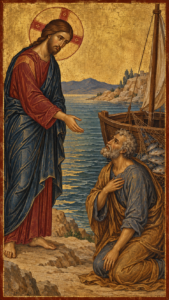
I will claim my sheep from them and put a stop to their shepherding my sheep so that they may no longer pasture themselves. I will save my sheep, that they may no longer be food for their mouths. This is the same thing said in the Psalm: Will these evildoers never learn? They devour my people as they devour bread. They will no longer pasture My sheep; behold I Myself will shepherd them, says the Lord. I separate the sheep from the bad shepherds whom they are imitating, as I said, do not do what they do; that is, may those sheep not do what the bad shepherds do. What does He say next? To whom does He give the sheep that He took away? Perhaps to good shepherds? He does not say. What are we to say, then, brothers? Is this because there are no good shepherds? Doesn’t it say elsewhere in Scripture: I will appoint over you shepherds after my own heart, who will shepherd you wisely and prudently (Jer 3:15)? Thus, as He does not give the sheep that He took from the bad shepherds to good ones, it would appear that there are no good shepherds anywhere; He will ask, however: ‘Will I Myself accept them?’ He had said to Peter: Tend My sheep. What are we to think, then? When He commends the sheep to Peter, the Lord does not say: I will pasture My sheep, so don’t you do it. Rather, He says: Peter, do you love Me? Feed My Sheep (Jn 21:17). Perhaps it is because Peter is no longer here–he has already been received into the rest of the apostles and the martyrs–that there is no one to whom the Lord of the sheep can confidently say: Tend My sheep? Perhaps, obligated by necessity, Christ lowers Himself in order to exercise the office of shepherding the sheep, as He has no one to commend them to and He does not desire to abandon them? It would seem this way, for following this we read: Thus says the Lord God: I swear, that is, the One to whom we said: Shepherd of Israel, listen, guide of the flock of Joseph! (Ps 80:1), of the people established in Egypt. Israel, already dispersed among all the nations, is Joseph himself. You know that Joseph emigrated to Egypt; this happens when his brothers sold him. Christ was sold by the Jews, though not without reason, for it was Judas among the Apostles who sold Him. Christ began to be amongst the Gentiles: there He was among the Gentiles, there He was honored, there His people grew, and they did not abandon their shepherd. Stir up your power, they said, and come to save us (Ps 80:2-3). Christ is already doing this, and He will do it; He says: For thus says the Lord GOD: I myself will look after and tend my sheep. As a shepherd tends his flock when he finds himself among his scattered sheep, so will I tend my sheep (Ez 34:11-12). The bad shepherds did not concern themselves with anything; they did not rescue the sheep at the price of their bad. I will rescue them from every place where they were scattered when it was cloudy and dark. He says, As a shepherd tends his flock when he finds himself among his scattered sheep. When is this? When it was cloudy and dark, that is, rain and fog. Rain and fog are the erring ways of the world, the great darkness that surges forth from the desires of men and a dense fog that covers the earth. It is difficult for the sheep not to stray in the midst of this fog; however, the shepherd does not abandon them. He seeks them out; He crosses the fog with sharp eyes, without letting the obscurity of the clouds impede Him. He sees them, and calls to the erring ones in every place, in order that what the Gospel says might be fulfilled: My sheep hear my voice; I know them, and they follow me (Jn 10:27). I will rescue them from every place where they were scattered when it was cloudy and dark. I will lead them out from among the peoples and gather them from the foreign lands; I will bring them back to their own country (Ez 34:12-13). When it is difficult to find them, it is them that I will find them. This is the great principle of authentic Catholic pastoral work! Whenever action seems useless in the face of a serious situation, the Lord is there to give much fruit.
We must never doubt God’s power!
G. The Mountain Heights of Israel
Are the Books of the Bible
In good pastures will I pasture them, and on the mountain heights of Israel shall be their grazing ground. There they shall lie down on good grazing ground, and in rich pastures shall they be pastured on the mountains of Israel (Ez 34:14). It was God who brought forth the mountains of Israel, that is to say, the authors of the divine Scriptures. Feed there that you may feed in safety. Whatever you hear from that source, you should savor. Whatever is foreign to it, reject. Hear the voice of the shepherd, lest you wander about in the mist. Gather at the mountains of Holy Scripture. There are the things that will delight your hearts; there you will find nothing poisonous, nothing hostile. The pastures are most plentiful there. There, you will be healthy sheep; you will feed safely on the mountain of Israel, and I shall feed them in streams and in every inhabited place in the land. From the mountains which we have shown you, there have issued streams of the Gospel message because their voice has gone forth into the whole world, and every habitable place has become pleasant and fertile for the grazing sheep. In good pastures and on the high mountains of Israel, I shall feed them and their grazing ground shall be there, that is, the place where they will rest, where they will say: “I am happy.” It is there that they will say: “It is true, it is clear, we are not deceived.” They will find rest in the glory of God, when they find rest in those grazing grounds. There they will sleep, that is, find rest, and they will rest in good pleasures.
In rich pastures shall they be pastured on the mountains of Israel. I have already spoken of the mountains of Israel, the good mountains to which we raise our eyes and from which may come our help. But our help is from the Lord, who made heaven and earth. Let us not then place our hope in the good mountains themselves, but let us rely on His word which says: I will feed my sheep on the mountains of Israel. Let us not merely remain on the mountains themselves, for He added immediately: I will feed my sheep. Raise your eyes, therefore, to the mountains, from where your help comes; however, take note that He says: I will feed. For your help is from the Lord, who made heaven and earth.
H. God Does the Exact Opposite
of What the Bad Shepherds Do
I myself will pasture my sheep; I myself will give them rest, says the Lord God. The lost I will seek out, the strayed I will bring back, the injured I will bind up, the sick I will heal (but the sleek and the strong I will destroy), shepherding them rightly (Ez 34: 15-16). Moreover, in order to let them rest, what did He concern Himself with beforehand? He concerned Himself with all the things that He later states: The lost I will seek out, the strayed I will bring back, the injured I will bind up, the sick I will heal. These are things that the evil shepherds did not do, as they only pastured themselves and not the sheep. The Lord does not say: “I will give them other shepherds who will do this,” but rather: “I Myself will do this: I will not confide My sheep to anyone else.” Be at ease, brothers; be confident, you sheep. We are the ones who must fear if good shepherds are not found.
He concludes by saying: And I will feed them with judgment. Observe that He alone so feeds His sheep, in feeding them with judgment. For what man can judge right concerning another? Our whole daily life is filled with rash judgments. He of whom we had despaired is converted suddenly and becomes very good. He from whom we had anticipated a great deal suddenly fails and becomes very bad. Neither our fear nor our hope is certain. What any man is today, that man himself scarcely knows. Still in some way he does know what he is today. What he will be tomorrow, however, he does not know. Hence the Lord, who assigns to each what is owed to him, feeds His sheep with judgment, giving some things to one group, other things to another, and to each his due. For He knows what He is doing. With judgment he feeds those whom he, being judged himself, redeemed. Therefore, He Himself feeds His sheep with judgment.
According to the prophet Jeremiah, a partridge that mothers a brood not her own is the man who acquires wealth unjustly. The opposite of this partridge who acquired riches without justice is the shepherd who pastures with justice. Why is the first without justice? It is because he acquired what he did not gain. Why is the second just? It is because he cared for what he had begotten. We are speaking here of the good shepherd. Good shepherds either do not exist or are hidden. If they don’t exist, why are we wasting our time talking about them? If they are hidden, why aren’t they spoken of? Some of our elders and commentators of Sacred Scripture saw the devil in that partridge, for he too gathers what he did not beget. He is not the creator, but rather a swindler, gathering his riches without justice. It doesn’t matter to him that one person wanders in this way, and a different person in another. He wants everyone to err, no matter what the errors might be. How many different heresies there are! How many distinct errors! He wants all men to err in all of them. The devil doesn’t say: “Be a Donatist, and not an Arian.” Be it here or there, they all belong to him, the one who gathers unjustly. “If he adores idols, he says, he’s mine; if he remains in the superstition of the Jew, he’s mine; if, abandoning unity, he goes in for this or that heresy, he’s mine.” He acquires wealth unjustly. But, why go on? In midlife it will desert him; in the end he is only a fool (Jer 17:11). Then comes the one who gathers His sheep from all the lands. In the bad shepherd’s midlife, before he thought it would come, before he thought of it, they will desert him, and he will appear as only a fool in the end. Why does he seem wise in the beginning, and then appear as a fool in the end? Scripture sometimes uses wisdom instead of cunning or guile, and thus it is a figurative sense and not the proper one. For this reason it is said: Where is the wise one? Where is the scribe? Where is the debater of this age? Has not God made the wisdom of the world foolish? (1 Cor 1:20). This partridge, this dragon, this serpent appeared wise when, through Eve, he tricked Adam. Adam believed that he was speaking the truth; he thought he was being given good advice. He believed the snake more than in God. According to the tradition of our scriptures–what do we care how worldly authors speak?–Wisdom was spoken of in an abusive and evil sense; this we can see in the same book: Now the serpent was the most cunning6 of all the animals that the Lord God had made (Gn 3:1-6). This beast, the wisest of all, was considered as cunning and capable in trickery. Afterwards he was given no credit for his talent. He was told: “We reject you; it is enough for us that you could trick us the first time.” For this reason, then, in his last days he will be seen as a fool. Those bad shepherds, then, will be uncovered as frauds and, for the same reason, they will no longer have their sheep. In the last days, the one who gathered what he did not beget and who acquired riches unjustly will be made into a fool. On the contrary, our Redeemer will pasture with justice.
Let us think of any heresy. While it is not the brother of the devil, it is certainly his helper and son. This heresy too can be called a partridge, a contentious animal. As hunters know, this animal can be hunted by its desire to fight. Heretics fight against truth, even from the very first moment in which they separate from it. Now they say: “We don’t want to fight,” because they are already captured. They have nothing to say except: “I don’t want to fight.” Oh captive! No doubt it was you who in the beginning of your separation accused others of being traitors, condemned the innocent, sought to sentence the emperor; you did not submit to the judgment of the bishops. Whenever you were conquered, you returned to appeal again; you even argued feverishly before the emperor himself. You joined together what you do not make. Where is your stiff neck now? Where is your tongue? Where is your whistle? Certainly you became stupid in these last days; you were terrified to be unable to judge. Now you no longer want to judge anything as certain, neither about your error nor about the truth. On the contrary, Christ shepherds with right judgment; He distinguishes the sheep that are His from the ones that are not. My sheep, He says, know My voice and follow Me.
I. There Is Only One Good Shepherd:
Jesus Christ!
In this statement I find that all good shepherds are one in the one shepherd. It is not that good shepherds are lacking; they are there in the one shepherd. When we speak of many we refer to those who are divided form each other. Here only one is spoken of, because in this passage unity is commended. The reason why shepherds are not mentioned here, but only one shepherd, is not because the Lord has failed to find anyone to whom to entrust His sheep; He entrusted the sheep to Peter because He had found Peter. Indeed, in the case of Peter He also commended the unity of the flock. There were many apostles, and yet to one only did He say: Feed my sheep (Jn 21:15). Do not imagine that there will be no more good shepherds, or that we shall find them lacking, or that the Lord’s mercy will not produce and establish them. Certainly, if there are good sheep there are also good shepherds; good sheep give rise to good shepherds. However, all good shepherds are one in the one good shepherd; they form a unity. If only they feed the sheep, Christ is feeding the sheep. The friends of the bridegroom do not speak with their own voice, but rather take great joy in listening to the bridegroom’s voice. Christ Himself is the shepherd when they act as shepherds. It is I who feed them, He says, because His voice is in their voice, His love in their love. When He entrusted His sheep to Peter as one person to another, Christ chose to make Peter one with Himself. He wanted to entrust Him with the sheep in such a way that He Himself might be the head and Peter might represent the body, that is, the Church. As bridegroom and bride, Christ and the Church were to be two in one flesh. Accordingly, what does He say before He entrusts the sheep to Peter as to someone who is not separate from Himself? Peter, do you love me? He answered: I love you. And again: Do you love me? He answered: I love you. And a third time: Do you love me? He answered: I love you. He receives an assurance of love in order to establish unity. Christ is the One Shepherd who is one with the other shepherds, and in whom they themselves are one. Shepherds are not mentioned, but they are not passed over. Shepherds have cause for pride, but if anyone boasts it should be in the Lord (cf. 2 Cor 10:17). This means that Christ should be the shepherd, that they should be shepherds for Christ, shepherds in Christ, not shepherds for themselves, apart from Christ. When the prophet said: I will feed my sheep, it was not because of a lack of shepherds, as though he were foretelling those evil times to come and saying: “I have no one to whom I can entrust my sheep.” At a time when Peter himself, and the apostles too, were alive in the body, Christ, the one in whom alone all are one, said this: I have other sheep that do not belong to this fold. These also I must lead, and they will hear my voice, and there will be one flock, one shepherd (Jn 10:16). All shepherds should therefore be one in the one Good Shepherd. All should speak with the one voice of the One Shepherd, so that the sheep may hear and follow their shepherd: not this or that shepherd, but the One Shepherd. All should speak with one voice in Christ, not with different voices. Brethren, I beg all of you to say the same thing, and to have no dissensions among you. The sheep should hear this voice, a voice purified from all schism, freed from all heresy. This is so that they follow their shepherd, who says: My sheep hear my voice and follow me.
The difference between good and bad shepherds is quite clear. The first lays down his life for the sheep (Jn 10:11), but the second group work for pay and has no concern for the sheep (Jn 10:13). The first seek the interests of Jesus Christ, and not their own; the bad ones seek their own interests, and not those of Jesus Christ. The good ones are only one thing with Jesus Christ and they throb with zeal for the unity of the Church; the bad ones have separated themselves from Jesus Christ and are a cause of division.
Upon seeing the evils that had befallen the Church, in 1773 Voltaire said: “In twenty years the Church will be no more.” More than 200 years have passed since that pseudo-prophecy, and the Church appears ever more young, more expansive, and stronger. A while back, then-Cardinal Ratzinger recalled: “An anecdote comes to my mind, one told about Cardinal Consalvi, Pope Pius VII’s secretary. He was told: ‘Napoleon intends to destroy the Church.’ The Cardinal responded: ‘He will not be able to, as even we have been unable to destroy it.’”7
May the Divine Shepherdess obtain for us the grace to have the Heart of the Good Shepherd!
Notes
- We follow Saint Augustine, Sermon 46 about shepherds (Ez 34:1-16). It was written around the year 410 in Hippo or Carthage. ↩
- Cf. Zenit, December 19, 2005. ↩
- Saint Gregory the Great, Homilies on the Prophet Ezekiel, L.1, 11, 4-6. ↩
- Saint Thomas Aquinas, S. Th., I-II, q. 109, a. 6, obj. 2; q. 112, a. 3, ad 1. ↩
- This line must be included in the commentary of Saint Augustine as a gloss. ↩
- callidior in Latin, which can mean both wise and cunning. ↩
- Revista 30 Giorni 3 (2000). 24. Interview with Card. Joseph Ratzinger: “Non riuscirà, neppure noi siamo riusciti a distruggerla.” ↩
Source: Carlos Buela, You Are Priests Forever, Volume 2: What the Priest Is (Part Two), IVE Press, New York, 2013, pp. 27-56. Text and notes from the original edition.