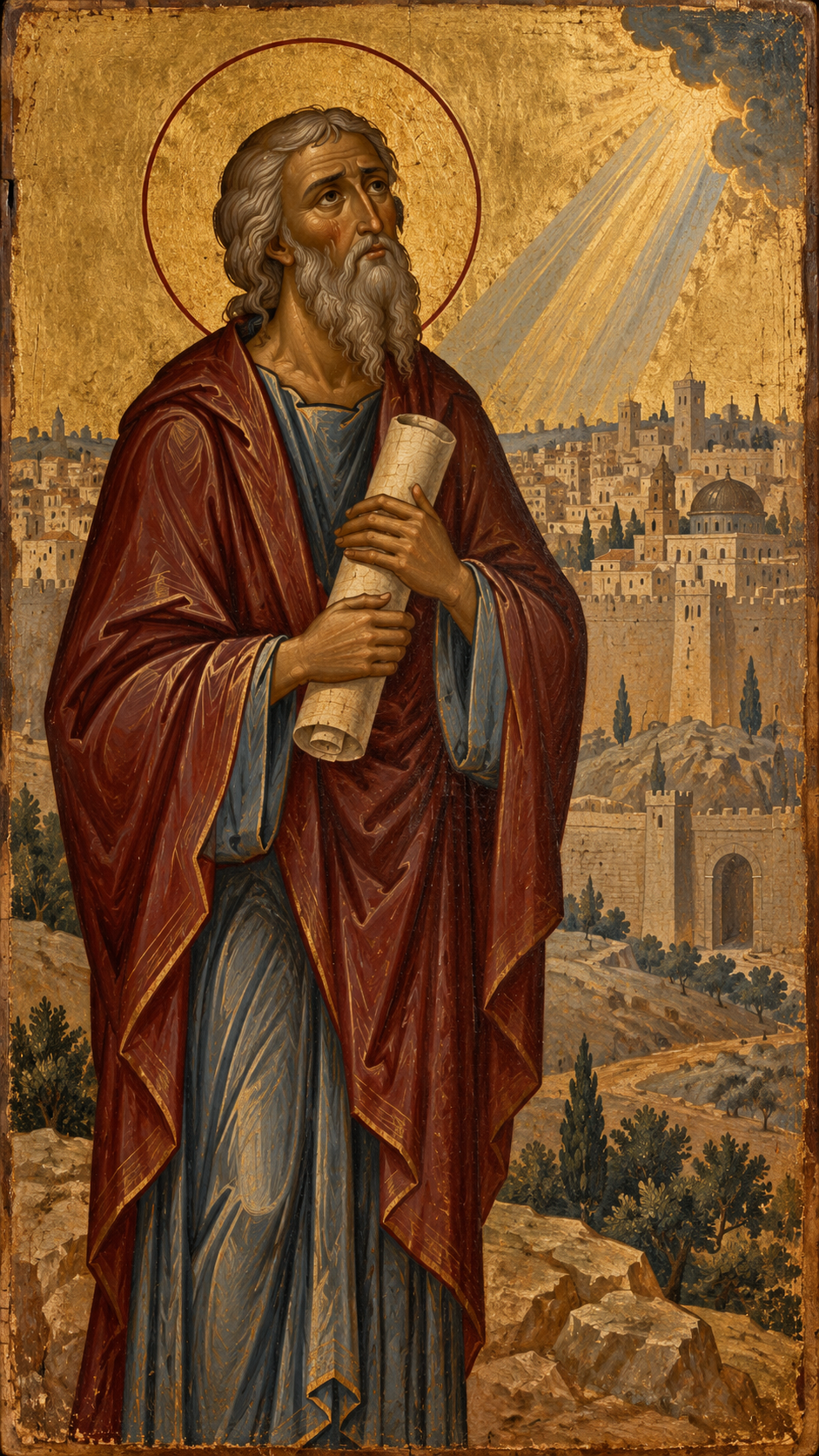

We priests are defenseless prophets, that is, we have no weapons: we are unarmed. Jesus Christ sent us to preach the Gospel to the whole world in this way, as Saint Vincent Ferrer says so beautifully: “They [who preach the Gospel] follow the movement of the sun, which comes out and illumines, warms and makes the whole world fruitful, and never stops in any one place.”1
With what ease do they calumniate, defame, and persecute priests! There are even orchestrated international campaigns: El Vicario, In the Name of the Father, Via col vento in Vaticano, and so many more.
Yet, who defends the priest? Perhaps the different means of social communication? We can affirm from experience that they don’t.2
Perhaps civil society, with its laws and justice? When help comes from these, it comes too late.
Perhaps superiors? The only ones who defend us are the good ones, the ones who have given their lives for their sheep, those who are moved by God. Many don’t know how to defend us, others cannot, and the rest don’t want to.
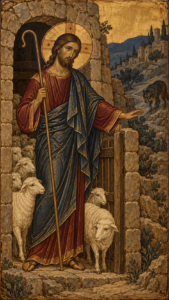
In the end, only God defends the priest, even though He sends us like sheep in the midst of wolves: Behold, I am sending you like sheep in the midst of wolves; so be shrewd as serpents and simple as doves (Mt 10:16); I am sending you like lambs among wolves (Lk 10:3).
It has been like this in each and every century.
In the first centuries, there were three great accusations:
A. The Burning of Rome
Tacitus affirms: “Nero fastened the guilt and inflicted the most exquisite tortures on a class hated for their abominations, called Christians by the populace. . . Upon their information, an immense multitude was convicted, not so much of the crime of firing the city, as of hatred against mankind. Mockery of every sort was added to their deaths. Covered with the skins of beasts, they were torn by dogs and perished, or were nailed to crosses, or were doomed to the flames and burnt, to serve as a nightly illumination, when daylight had expired.”3
B. The Accusation of Cannibalism
The historian A. Hamman writes: “The Eucharistic celebration, in which the bishop says: This is My Body, this is My Blood, is presented as a cannibalistic rite: the Christians immolated a child–it is said–as in the Festival of Thyestes. All of the apologists felt the obligation to come out against these falsehoods that were running from city to city throughout the length of the 2nd century. The meetings in community, in which the Christians called each other brother and sister and gave each other the kiss of peace, were given the worst interpretations, and they came to be licentious encounters. For the rotten it is difficult to believe in virtue, and for the libertine it is difficult to recognize that there are chaste men and women. From there, there is only one more step to accuse the voluntarily celibate of being anti-social or a deviant, a step which is often taken.”4 In Minucius Felix’s writing to Octavius, we read, “I hear that they adore the head of an ass, that basest of creatures, consecrated by I know not what silly persuasion: a worthy and appropriate religion for such manners. Some say that they worship the virilia of their pontiff and priest, and adore the nature, as it were, of their common parent. I know not whether these things are false; certainly suspicion is applicable to secret and nocturnal rites. . . Now the story about the initiation of young novices is as much to be detested as it is well known. An infant covered over with meal, that it may deceive the unwary, is placed before him who is to be stained with their rites: this infant is slain by the young pupil, who has been urged on as if to harmless blows on the surface of the meal, with dark and secret wounds. Thirstily–O horror!–they lick up its blood; eagerly they divide its limbs. By this victim they are pledged together; with this consciousness of wickedness they are covenanted to mutual silence. Such sacred rites as these are more foul than any sacrileges.”5 Saint Justin writes, “Have you also believed concerning us, that we eat men; and that after the feast, having extinguished the lights, we engage in promiscuous concubinage?”6
C. Atheism
The worst of the accusations was that of atheism. Athenagoras says: “Three things are alleged against us: atheism, Thyestean feasts, Œdipodean intercourse. . . [We know that it is a custom that comes from of old and is not invented only in our case, for it] originates in the fact that virtue is opposed by its very nature to vice, and that contraries war against one another by a divine law.”7 It was the accusation against Saint Polycarp, as accounts tell us that “upon this the whole multitude, marveling at the nobility of mind displayed by the devout and godly race of Christians, cried out, ‘Away with the Atheists; let Polycarp be sought out!’”8 Saint Justin comments, “Hence are we called atheists.”9 This calumny lasted more than a century.
In 845 a violent edict from the Emperor Wutsung, from the Tang dynasty in China, unleashed the first great persecution, attributing the following to us Christians: “They are made to love their teachers more than their kings and their parents, and they weaken the institution of the family by retiring to monasteries. Their strengths are consumed in unproductive works; they trick the poor in order to take possession of their money and their jewels. For each monk who does not work the land, someone suffers hunger; for each monk who does not work the silk, someone suffers cold.” Professor Gardini affirms, “The cited accusation has remained substantially unchanged throughout the centuries until our day.”10
In our day, the accusations and persecutions of liberalism, Nazism, Communism, and others are very well-known. However, there is also the contradiction of the good, for example, of Cardinals Mindszenty11 and Wyszynski,12 who, in addition, to the sufferings imposed by the Communist regime, suffered at the hands of some of their brothers. Saint Pio of Pietrelcina suffered harsh misunderstandings of some members of the Holy Office and others. Saint María Micaela had almost all of the clergy of Madrid against her.13 Saint John Bosco had difficulties with Archbishop Ricardi of Turin and with his successor, Bishop Gastaldi, who removed his faculties to hear confessions and who “for three years delayed the issuing of the dimissorial letters for the ordinations of new Salesian priests, and who put up all possible obstacles so that the ordinations might not be carried out.”14 Saint Philip Neri also had his faculties to hear confessions removed. Father Joseph Kentenich, the founder of Schöenstatt, was exiled to Milwaukee with the accusation of a lack of ecclesial sense, and his difficulties lasted for 15 years (he is now in the process of canonization).15 The examples can be multiplied with more saints: Saint Teresa of Jesus, whom the Nuncio Sega called “an anxious and walking woman, disobedient and obstinate” and charged that her foundations were without permission from the Pope and from her superiors.16 John of the Cross was imprisoned for nine months in Toledo. We have John of Avila, Louis Marie Grignion de Montfort, and Joseph of Cupertino, whose superiors put him in prison for 13 years. We have Saints Juan Bautista de la Concepción, Anthony Mary Claret, Alphonsus Maria de Liguori, Joseph Calasanz (the patron saint of founders in difficulty), Joseph Benedict Cottolengo, Joan of Lestonnac, Rafaela Maria del Sagrado Corazón, John Calabria, Benedict Menni, Mary Mackillop, Jeanne Jugan, Escrivá, Henry of Osso, Póveda; we have the blesseds Francisco Palau, Comboni, Alix Le Clercq, Paulina del Corazón Agonizante, Cardinal Ferrari, Bonifacia Rodríguez, and María de la Pasión. Let’s not forget Alfonsa Cavín, Antonia París, and so many others as well.
What is our best defense? Our best defense is to be like sheep, like lambs: to suffer calumny, disrepute, cursing, and persecution with meekness.
Why did Jesus Christ send us without defenses into the midst of wolves? Saint John Chrysostom magnificently explains the reasons:17
There are four objectives that were achieved in sending us defenseless:
“Many advantages were hence secured; and first, that they learned the power of His foreknowledge; secondly, that no one should suspect, that through weakness of their Master came these evils upon them; thirdly, that such as undergo these things should not be dismayed by their falling out unexpectedly, and against hope; fourthly, that they might not at the very time of the cross be troubled on hearing these things.
For the present He announces before what should happen to them. Then, that they might learn that this system of war is new, and the manner of the array unwonted; as He sends them bare, and with one coat, and unshod, and without staff, and without girdle or scrip, and bids them be maintained by such as receive them.”18
Sending us as sheep in the midst of wolves shows His power: “So neither here did He stay His speech, but to signify His unspeakable power, He says, ‘Even thus setting out, exhibit the gentleness of sheep, and this, though you are to go unto wolves; and not simply unto wolves, but into the midst of wolves. . . For thus,’ he seems to say, ‘shall I best show forth my might, when sheep get the better of wolves, and being in the midst of wolves, and receiving a thousand bites, so far from being consumed, do even work a change on them a thing far greater and more marvelous than killing them, to alter their spirit, and to reform their mind; and this, being only twelve, while the whole world is filled with the wolves.’”
If we are like sheep, we conquer by being pastured by Christ, who sent us: “For so long as we are sheep, we conquer: though ten thousand wolves prowl around, we overcome and prevail. But if we become wolves, we are worsted, for the help of our Shepherd departs from us: for He feeds not wolves, but sheep: and He forsakes you, and retires, for neither do you allow His might to be shown.
Such terrors await them, while themselves are working miracles. What then is their consolation for all these things? The power of Him that sends them. Wherefore also He puts this before all, saying, Behold, I send you. This suffices for your encouragement, this for confidence, and fearing none of your assailants.”
He could have sent us, not like sheep, but rather as lions: “For I might indeed have done the contrary, and have suffered you to undergo nothing terrible, nor as sheep to be exposed to wolves; I might have rendered you more formidable than lions; but it is expedient that so it should be. This makes you also more glorious; this proclaims also my power.
For in saying, I send you forth as sheep, He intimates this: Do not therefore despair, for I know, I know certainly, that in this way more than any other you will be invincible to all.”
We must not only be gentle, but also prudent, and the greatest prudence is to conserve the faith: “But let us see what manner of wisdom He here requires. That of the serpent, He says. For even as that animal gives up everything, and if its very body must be cut off, does not very earnestly defend it, so that it may save its head; in like manner do the same, says He, give up everything but the faith, though goods, body, life itself, must be yielded. For that is the head and the root; and if that be preserved, though you lose all, you will recover all with so much the more splendor.”
In addition to meekness and prudence, we must add simplicity: “Wisdom again is useless, except if this simplicity be added. Now what, I ask, could be stricter than these injunctions? Why, was it not enough to suffer wrong? No, says He, but I do not permit you so much as to be indignant. For this is the dove. As though one should cast a reed into fire, and command it not to be burnt by the fire, but to quench it. . . For He beyond all others knows the nature of things; He knows that fierceness is not quenched by fierceness, but by meekness.
Do you see how we must be perfect on all points, so as neither to be abased by dangers, nor provoked by anger?
Thus again is He preparing them to be vigilant, in every case assigning to them the suffering of wrong, and permitting the infliction of it to others; to teach you that the victory is in suffering evil, and that His glorious trophies are thereby set up.”
We don’t have material weapons, arms as the world understands them. We have spiritual weapons, as Saint Paul teaches: So stand fast with your loins girded in truth, clothed with righteousness as a breastplate, and your feet shod in readiness for the gospel of peace. In all circumstances, hold faith as a shield, to quench all (the) flaming arrows of the evil one. And take the helmet of salvation and the sword of the Spirit, which is the word of God (Eph 6:14-17).
Saint Paul brilliantly describes the variety of spiritual weapons (similar to corporeal ones), of which there are three classes, according to the explanation of Saint Thomas:19
With the clothing, which is for covering, we defend ourselves against our carnal enemies and we conquer our earthly concupiscence:
Firstly, clothing must be bound with a belt; regarding this he says, Stand fast with your loins girded. However, a man clothes himself before he puts his belt on. Here the Apostle follows the order of spiritual armor. In spiritual warfare it is first necessary to check carnal desires, just as the nearest enemy must be conquered first. This is done by bridling the loins in which sensuality thrives; such girding is done through temperance which is opposed to gluttony and sensuality.
Secondly, the Apostle admonishes us to overcome greed for created things:
He says clothed with righteousness as a breastplate, on account of which a man keeps out of other people’s property. Justice is referred to as a breastplate because it covers all the virtues.
The helmet defends us from an excessive care about temporal things: Defensive weapons are to protect us from errors, and confirm us in spiritual goods, and they correspond to the two areas which must be protected: the heart and the head, and thus it is necessary to have:
The shield consists of the theological virtue of faith, and wards off all the flaming arrows of the evil one. These arrows are extinguished through faith, because faith quenches present and transitory temptations with the eternal and spiritual blessings promised in Holy Scripture.
The helmet represents hope of the end, and motivates us to live in charity. This is because as a helmet is on the head, so the head of the moral virtues is the end, and hope is concerned with this end. As Saint Augustine says, “Against the violence of charity the world can do nothing.”
The weapons for attacking help us to challenge the demons themselves: The sword represents the Word of God, that is, the preaching with which demons are challenged. It frequently happens that during sermons, when the word of God is preached and penetrates into the hearts of sinners, it thrusts out the chaos of sins and demons. Preaching is called the sword of the Spirit not because it penetrates into the spirit, but rather because it is guided by the Holy Spirit.
Let us learn to always be sheep, and–which is part of the same thing–to vest ourselves with spiritual weapons. Where is the arena to learn to be sheep, in order to learn skill in the use of spiritual weapons? The best arena is the Mass.
There we learn to love the Truth of the faith, to love justice that gives God and neighbor what corresponds to them; there we learn to have zeal for the Gospel of peace and to have devotion to the word of God. At Mass we experience growth in hope and in charity, in the spirit of prayer, in docility to the Holy Spirit. We intercede for all without excluding anyone. We adore God and we love the Virgin.
In another place, Saint John Chrysostom, referring to persecutions, said, “Talk not to me of walls and arms: for walls wax old with time, but the Church has no old age. Walls are shattered by barbarians, but over the Church even demons do not prevail. And that my words are no mere vaunt there is the evidence of facts. How many have assailed the Church, and yet the assailants have perished while the Church herself has soared beyond the sky? Such might has the Church: when she is assailed, she conquers. When snares are laid for her, she prevails. When she is insulted, her prosperity increases. She is wounded yet sinks not under her wounds, tossed by waves yet not submerged, vexed by storms yet suffers no shipwreck. She wrestles and is not worsted, fights but is not vanquished. Wherefore then did she suffer this war to be? That she might make more manifest the splendor of her triumph.”20
Saint Hilary wrote more concisely: “It is the peculiar property of the Church that when she is buffeted she is triumphant, when she is assaulted with argument she proves herself in the right, when she is deserted by her supporters she holds the field.”21
If the priest is a sheep, no matter how many wolves surround him, even if they surround him on all sides, he is invincible! This is given by the words of Christ: Behold, I am sending you like sheep in the midst of wolves (Mt 10:16), as though to say, I know very well that in this way you are invincible!
May the Virgin Mary teach us to be good sheep of the sheepfold of Jesus Christ.
Notes
- Saint Vincent Ferrer, Biografía y escritos de San Vicente Ferrer (Madrid 1956) 651. ↩
- On the contrary, it would seem that some means are pledged to degrade the mystery of the Church and the priesthood. It is enough to name a few movies, like The Name of the Rose, The Last Temptation of Christ, Priest, The Body, Dogma, and Stigmata. ↩
- Tacitus, Ann. XV, 34. ↩
- A Hamman, La vida cotidiana de los primeros cristianos (Madrid 1986) 107-109. ↩
- Martyrdom of Polycarp, IX, 2-3. ↩
- Dialogue with Trypho, 10. ↩
- Athenagoras, A Plea for the Christians, 3-4; 31. ↩
- Martyrdom of Polycarp, IV, 2. ↩
- Saint Justin, Apology 1, 6. ↩
- Walter Gardini, El Cristianismo llega a China (Buenos Aires 1983) 21-22. ↩
- Memorias (Buenos Aires 1975). ↩
- Diario de la cárcel (Madrid 1984). ↩
- J. M. Cejas, Piedras de escándalo (Madrid 1992) 48ss; here the story can be found of how she was slapped by a priest. ↩
- J. M. Cejas, Piedras de escándalo (Madrid 1992) 73. ↩
- J. M. Cejas, Piedras de escándalo (Madrid 1992) 98ss. ↩
- Reform, I, L.4, c. 30, 22; citing Saint Teresa, Obras Completas, 1723. ↩
- Homilies on the Gospel of Saint Matthew, 33, 1-4. ↩
- Note the beauty of the expression and the sublime reality that it expresses: this system of war is new, and the manner of the array unwonted. Throughout the centuries, it continues to be this way. ↩
- Ad Ef, 6, 4. ↩
- De Capto Eutropio 1: PG 52, 597s. More than a century before, Saint Hippolytus beautifully developed this idea of the stability of the Church in De Antichristo, 59; PG 10, 777-780. ↩
- De Trinitate 7, 4: PL 10, 202. Saint Augustine presents these ideas beautifully in Sermon 2, 5: PL 37, 1353. ↩
Source: Carlos Buela, You Are Priests Forever, Volume 2: What the Priest Is (Part Two), IVE Press, New York, 2013, pp. 63-72. Text and notes from the original edition.