
Feast of the Transfiguration of the Lord – August 6th
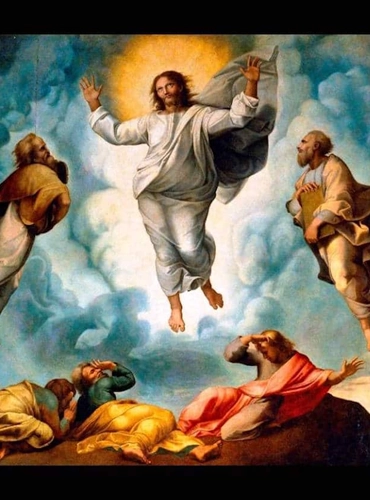
Today’s feast recalls that moment when, shortly before His passion, Christ revealed His glory to His three closest Apostles. Jesus knew that His suffering and death would be a cause of scandal to them, and so He prepared them in advance by showing them the glory that was hidden beneath ordinary appearances.
Indeed, the whole of Christ’s life and ministry was one of hidden realities. Thomas Aquinas says that Christ “did divine things humanly” (ST III, q. 19, a. 1, ad 1), meaning, His human nature served as the instrument of His divine power. Throughout His life, Christ appeared as an ordinary man, who did many ordinary things, such as His work as a carpenter, or His prayers in the synagogue. Yet, when we examine them more closely, we see that, under those seemingly normal appearances, lie the divine power, the Second Person of the Trinity who took on a human nature. The Divinity hid itself, as it were, in order to work among men.
For us in our lives, today’s feast has a double importance. On one hand, we’re reminded that Christ continues to work in the world today. Often His actions might seem hidden, or unclear, but we know that the same Christ who was transfigured on the mount is present today with His power, guiding the course of world events and aiding us in our needs.
In the same way, we’re reminded that we, too, must live transfigured lives. Just as Christ’s ordinary life hid extraordinary power and holiness, our lives might seem unspectacular or simple. However, this doesn’t mean that they aren’t filled with daily opportunities to draw near to God, to love and serve Him, and to make Him known to others. If the truth of the Transfiguration lives within us, then we will be able to witness to God amid ordinary events and we too will be instruments of Christ.
As we celebrate today’s feast, let’s ask, through the intercession of Our Lady of the Transfiguration, for the grace to live transfigured lives, to draw near to Christ, particular in His hidden presence in the Eucharist.